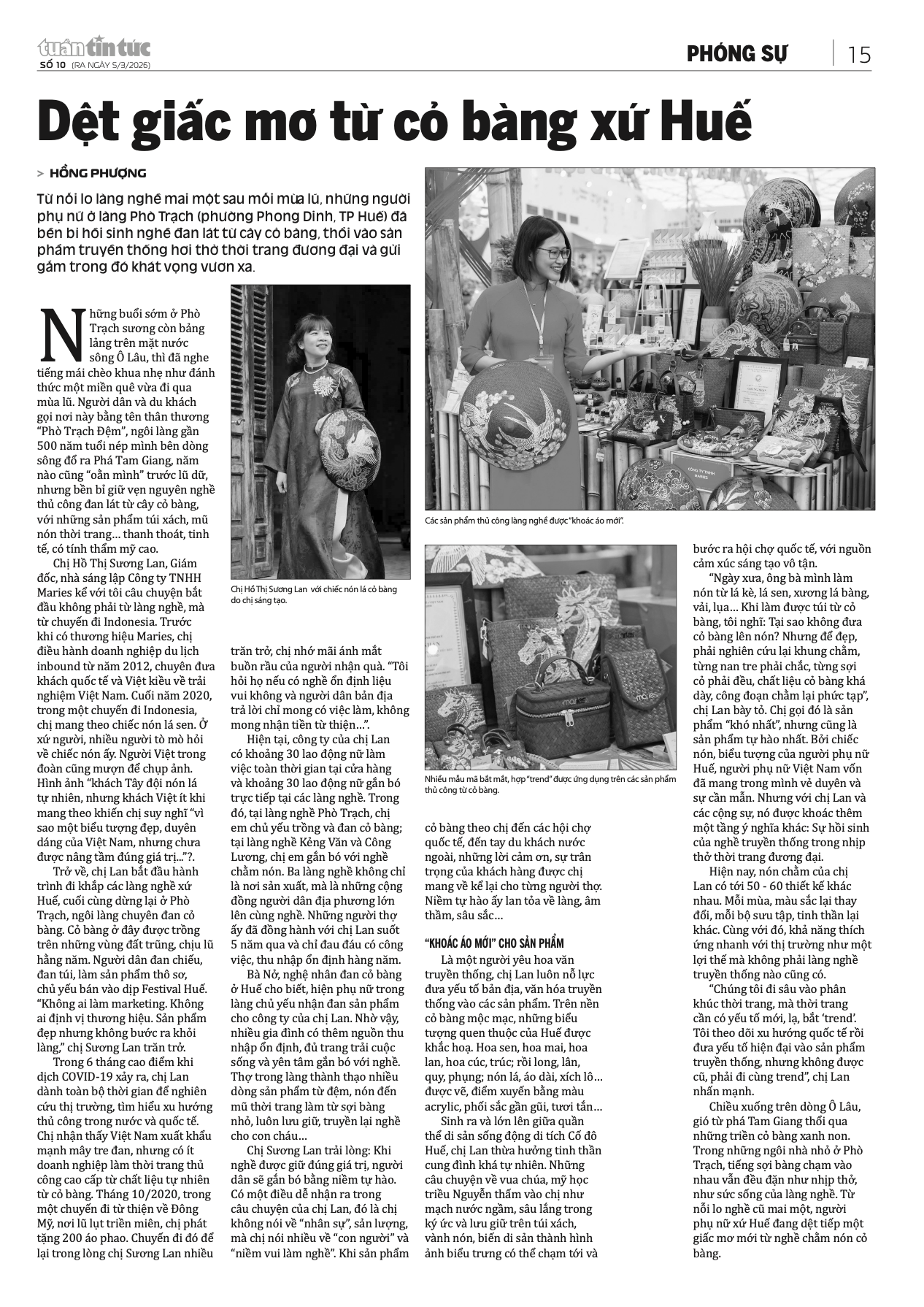
How Can the Vietnamese Conical Hat Be Elevated to Its True Value?
Following Ms. Ho Thi Suong Lan – Director of Maries Co., Ltd. – in the story of bringing the traditional Lepironia grass conical hat of Huế to a wider audience, as featured in News and Ethnic Minority Newspaper.
Hue has long been associated with the graceful image of the Vietnamese conical hat. Yet transforming this familiar everyday item into a valued handicraft product—one that both Vietnamese people and international visitors appreciate—has never been a simple journey.
That journey began with very small steps taken by Ms. Ho Thi Suong Lan, founder of Maries, a Hue-based handicraft brand specializing in products made from Lepironia grass (cỏ bàng). Quietly but persistently, she has been connecting centuries-old craft villages to write a new chapter for the traditional conical hat.
1, Craft Stories from the Villages:
Everything started with a chance encounter during her visits to rural villages. What began as brief stops—initially while delivering life jackets to communities affected by floods—gradually turned into longer and more frequent returns. Ideas that once existed only as thoughts soon became concrete actions. Though modest at first, these steps were driven by a clear intention: to create positive change for local craft communities and help preserve traditional values that were slowly fading in the countryside of Hue.
What concerned Ms. Lan most when visiting the villages was not the artisans’ skills. On the contrary, their craftsmanship was remarkably refined. The problem was that their products rarely moved beyond the village itself. “No one was doing marketing. No one was positioning the brand. The products were beautiful, but they never made it out of the village,” Ms. Lan shared with News and Ethnic Minority Newspaper
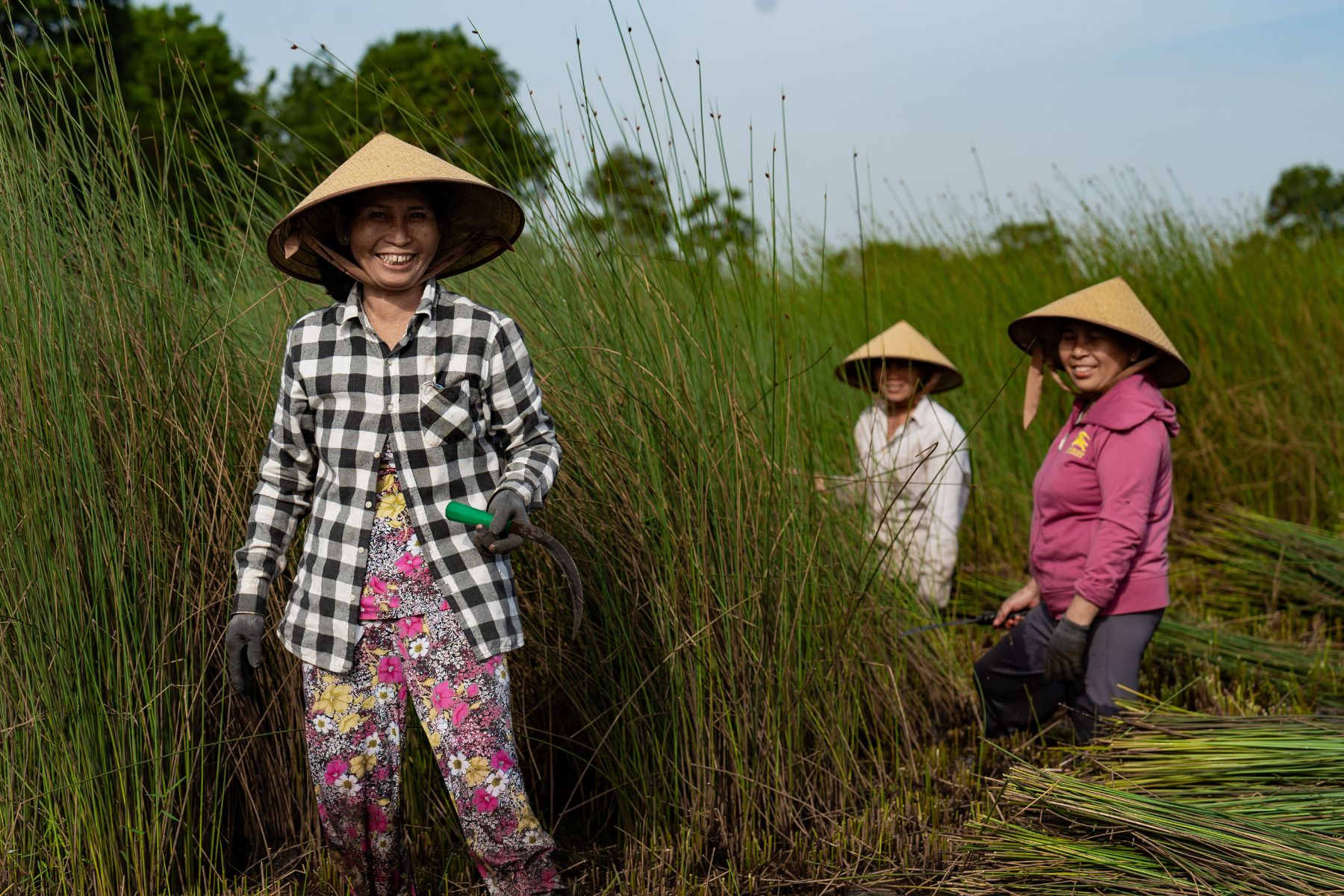
Starting with the smallest steps, she began researching the handicraft market in Vietnam. In the process, she realized that while the country has a strong reputation for exporting bamboo and rattan products, there were very few enterprises developing high-end handcrafted fashion from natural materials such as Lepironia grass.
In the months that followed, Ms. Lan became a familiar face in the villages. She visited regularly, sitting with the artisans and listening to everyday stories—about caring for grandchildren, cooking meals, farming rice, and harvesting grass. Through these simple conversations, she understood something essential: many women in the villages hoped to work from home. They wanted to continue practicing their craft while still caring for their families. In Vietnamese culture, women have long carried the responsibility of family life, yet they also hold a deep desire to preserve the traditional skills passed down from mothers and grandmothers—skills that provide both livelihood and cultural continuity.
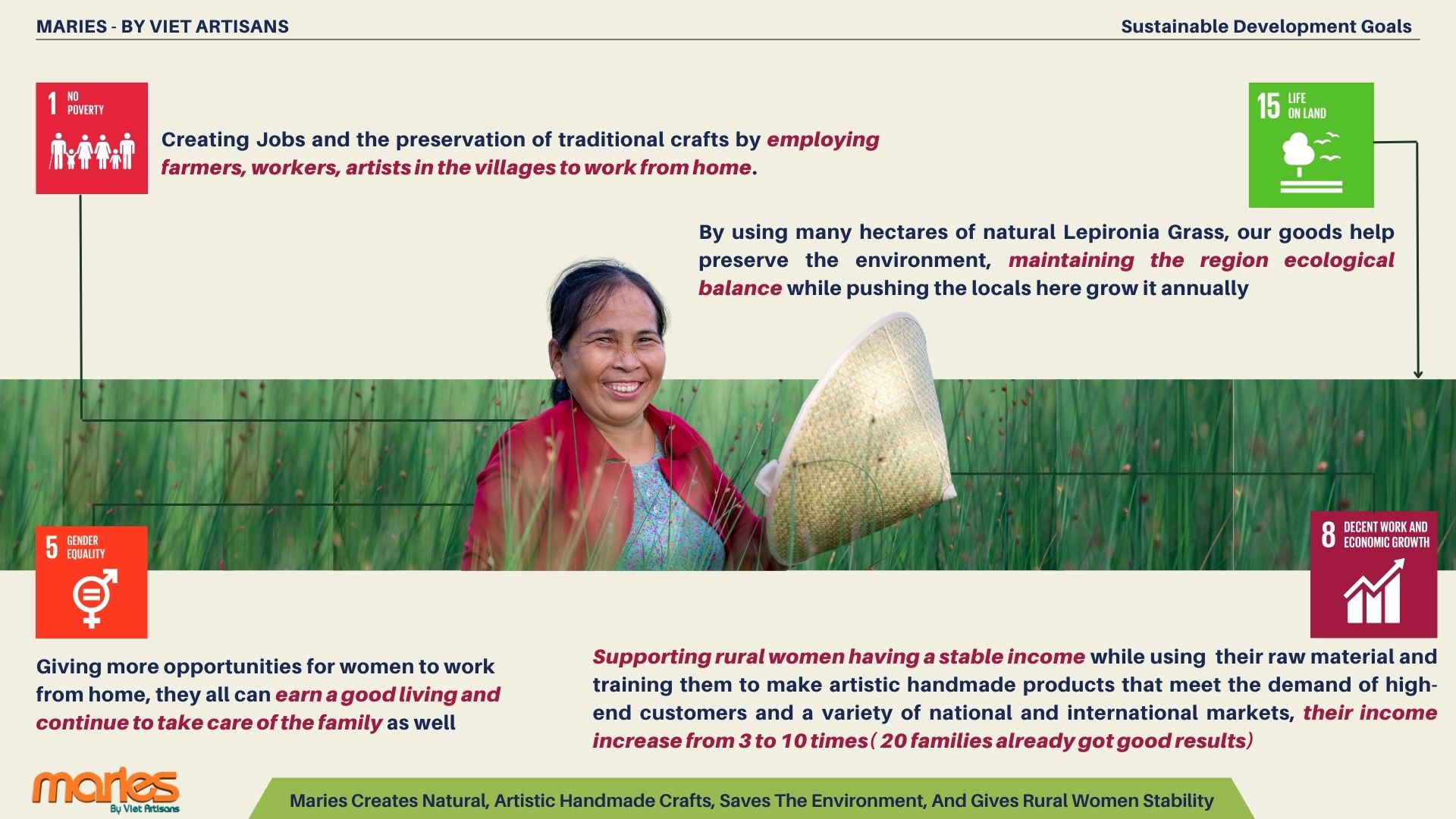
Today, in addition to Phò Trạch Village, well known for its Lepironia grass weaving, Maries works closely with two traditional conical-hat-making villages in Huế: Kẻng Văn and Công Lương. These three villages are not merely production sites; they are communities that have grown alongside their craft for generations. For more than five years, the artisans have accompanied Ms. Lan on a shared journey of preserving their trade, with a simple yet enduring hope: stable work and consistent income so they can continue living from the craft they inherited.
2. Elevating the Value of Traditional Lepironia Grass Products
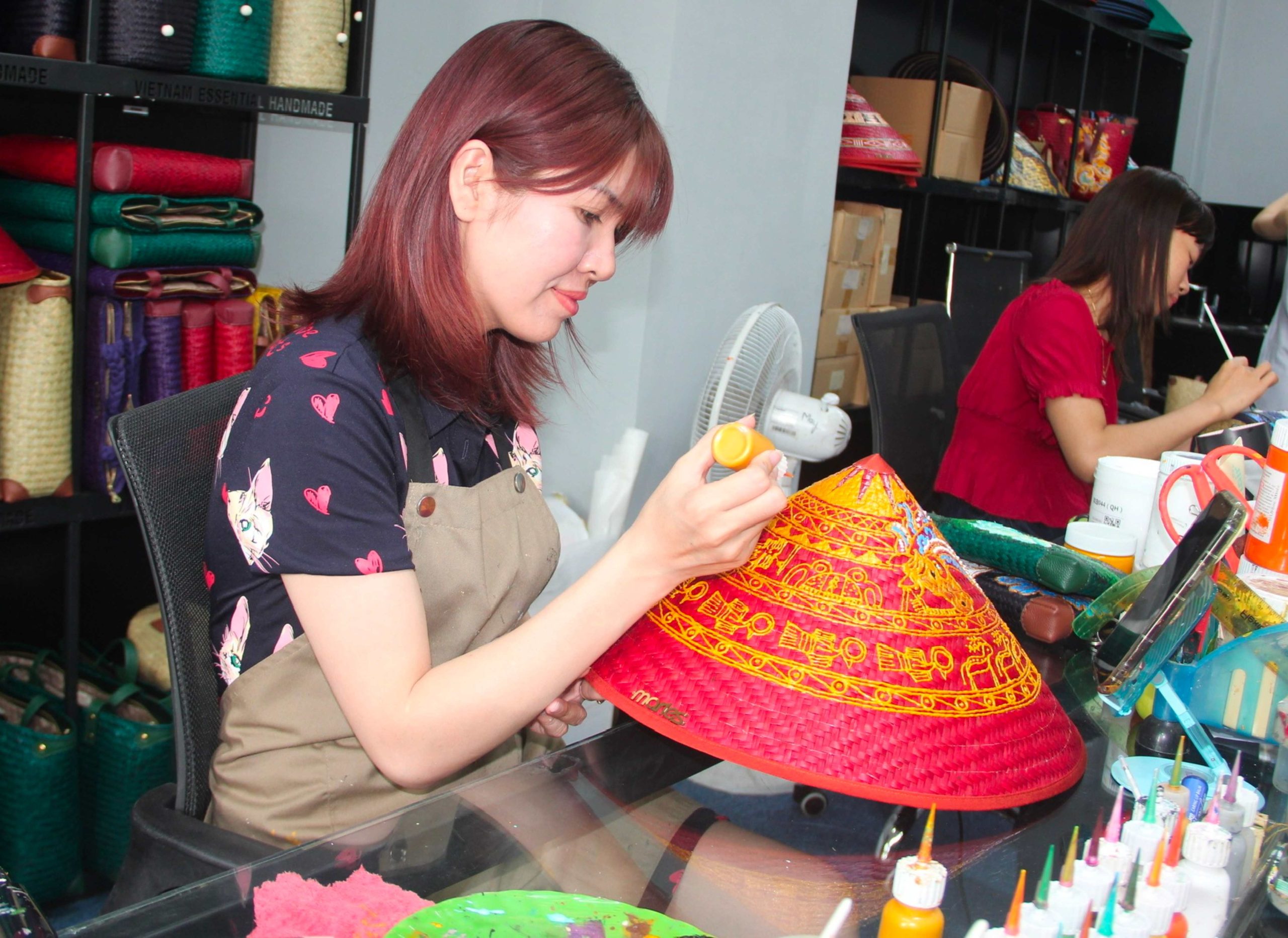
Maries began its journey to elevate the Lepironia grass conical hat with a clear vision: each hat should not only be a handcrafted product but also a cultural symbol—one that Vietnamese people feel proud to wear and that international visitors cherish as a meaningful souvenir. Within every stitch and weave, familiar symbols of Vietnamese culture are delicately expressed on the humble surface of natural grass.
As someone deeply fond of traditional motifs, Ms. Lan continually seeks to integrate local cultural elements of Huế into the designs. Gradually, recognizable patterns have appeared on hats and bags, creating a bridge between traditional materials and contemporary aesthetics.
If the conical hat represents heritage, the Lepironia grass bags reflect the craft villages’ ability to adapt. In the world of handicrafts, design limitations are often accepted as inevitable. However, Ms. Lan believes tradition must evolve with the times.
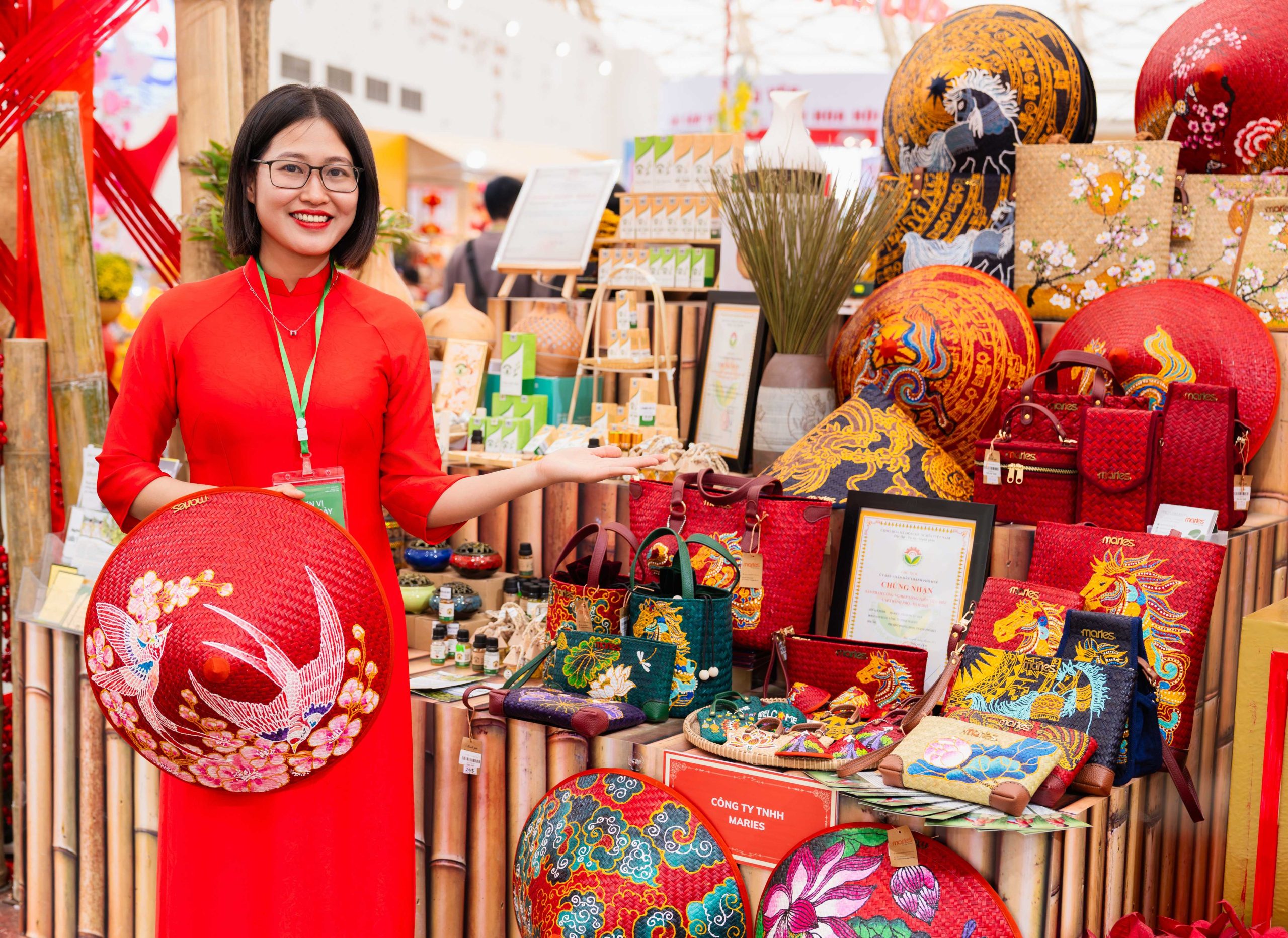
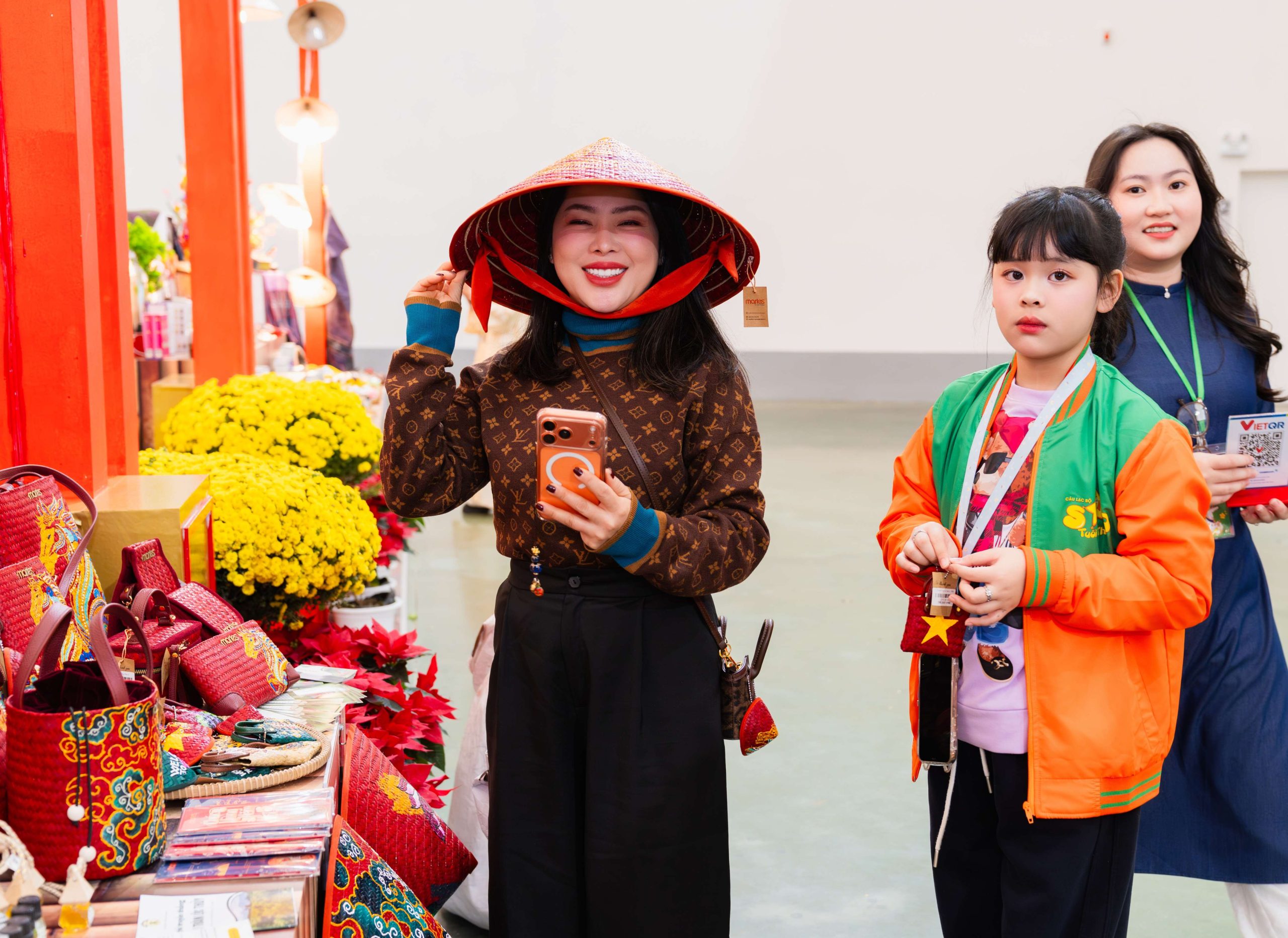
Today, Maries develops 50–60 different bag designs, regularly refreshing colors and concepts with each season to align with changing market tastes.
As evening falls along the Ô Lâu River, winds from Tam Giang Lagoon sweep across the green stretches of Lepironia grass. In the small houses of Phò Trạch, the gentle sound of weaving continues rhythmically—like the steady breath of the village. Hands that once wove grass mats to protect homes from floods now create hats and bags that appear at international fairs. From fears that the craft might disappear, women in Huế are now weaving a new dream for their future.
Traditional crafts do not disappear because artisans lose their passion. They fade when their labor is not valued fairly. When that value is recognized, artisans remain committed to their work—not only for income, but also for the pride of preserving a piece of their cultural heritage.
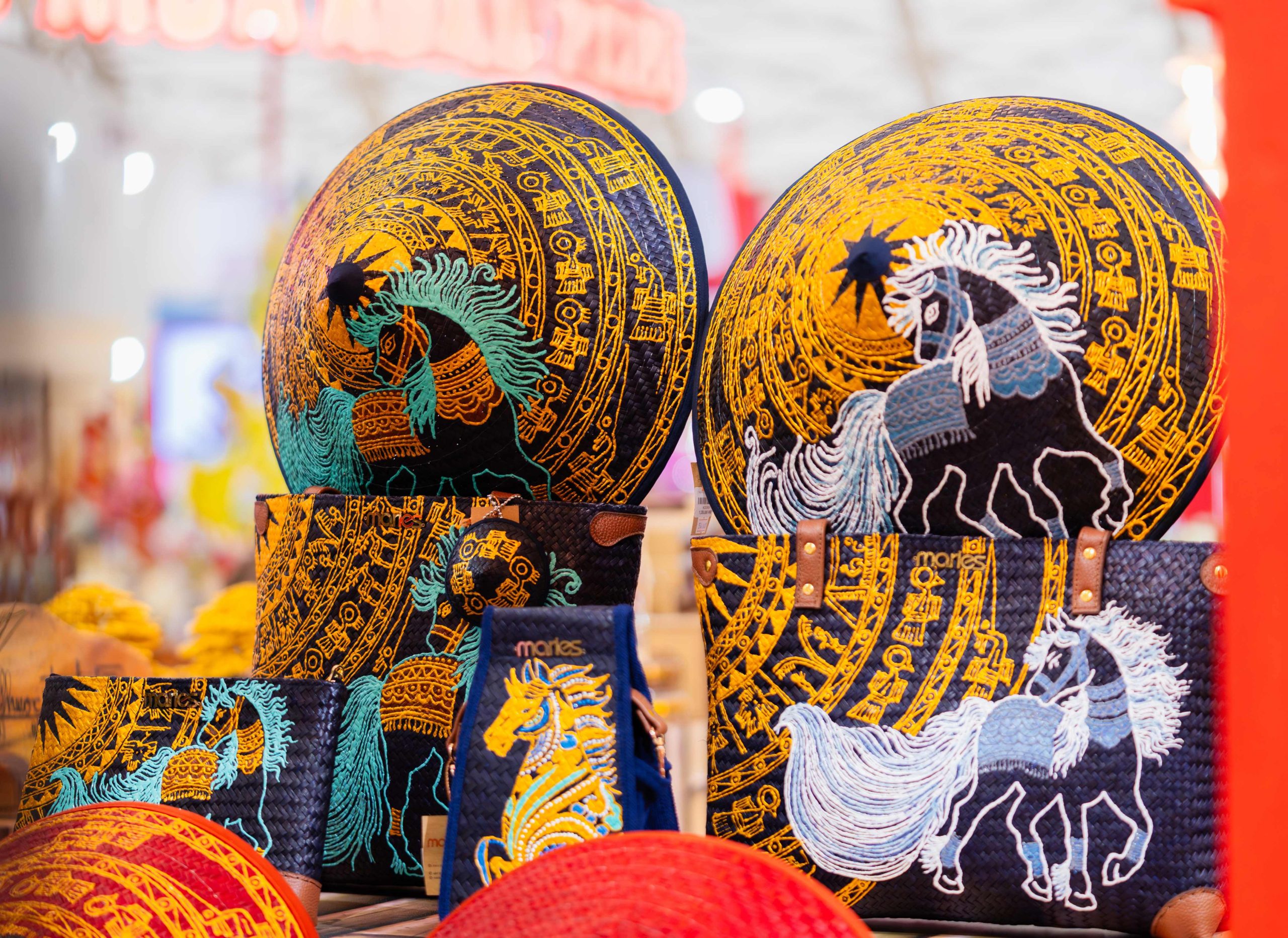
Special thanks to Ms. Hong Phuong from News and Ethnic Minority Newspaper, whose meeting with Maries at the Spring Fair inspired this article—one born from the dedication of the writer, the enduring spirit of traditional craft villages, and the many people who continue to keep this story alive today.

 Tiếng Việt