Tiếng Việt
“The water source for growing lepironia grass isn’t something you can find just anywhere. Only this area can grow it… because the water has to be clean—natural wetland water. If you use tap water, the grass will be ruined immediately.”
Mr. Thành said this as he wiped the sweat from his face by the edge of the field, after carrying several heavy bundles of lepironia grass in a row. His voice was clear and steady, as if he were talking about something he understood deeply—and took great pride in. Then he laughed, a light and natural laugh: “Luckily, I married a woman from the same village who works hard—she grows the grass, harvests it, then we weave it. Otherwise, I’d have had to find another job long ago…”
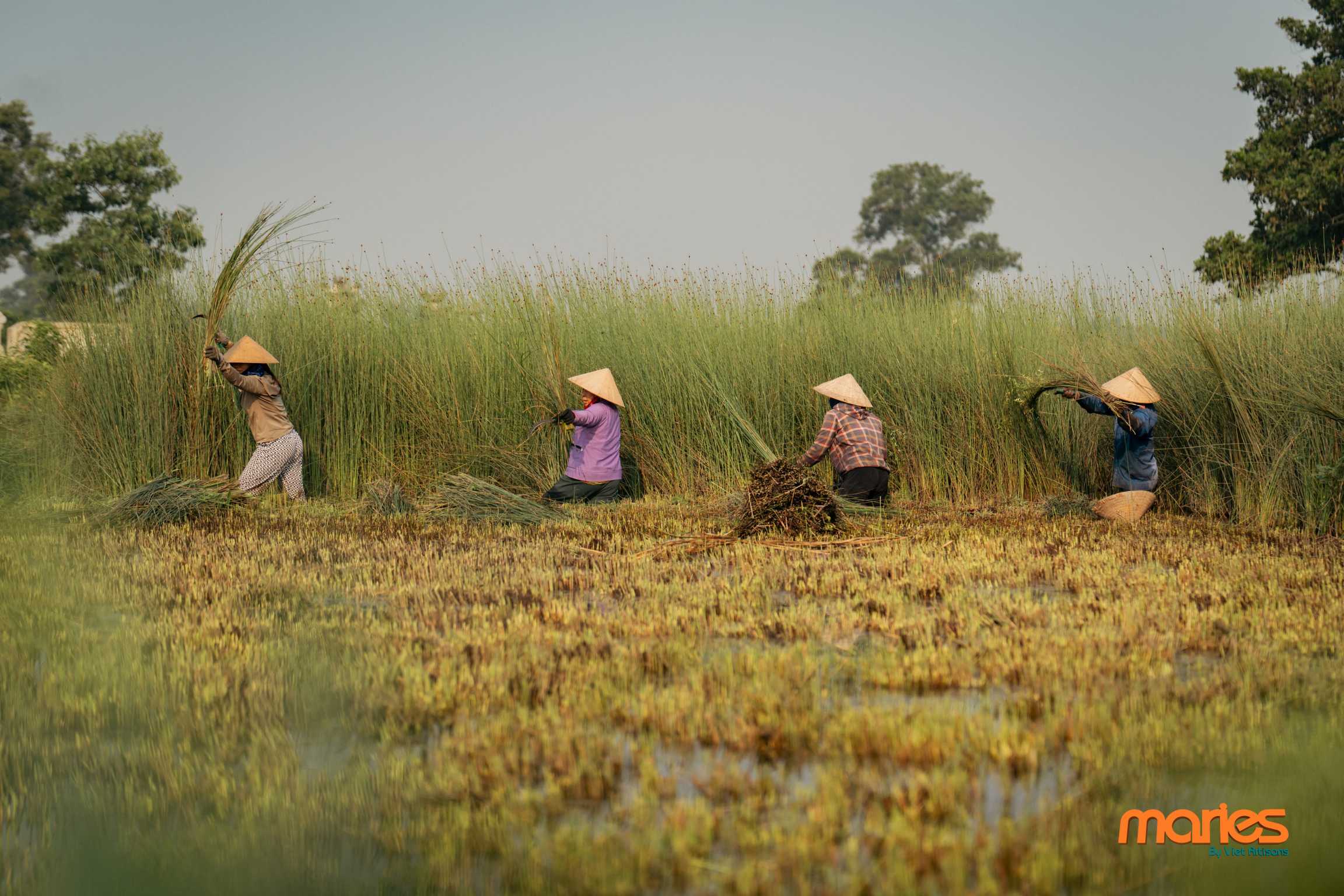
Nearby, Mrs. Liên simply smiled without adding anything. Her hands continued to move quickly, gathering the lepironia grass into neat bundles—a habit she had carried with her for decades. They are both getting older now. Their backs are no longer as straight as they once were, yet every season they still go out to the fields, still carry the harsh Central Vietnam sun on their shoulders.
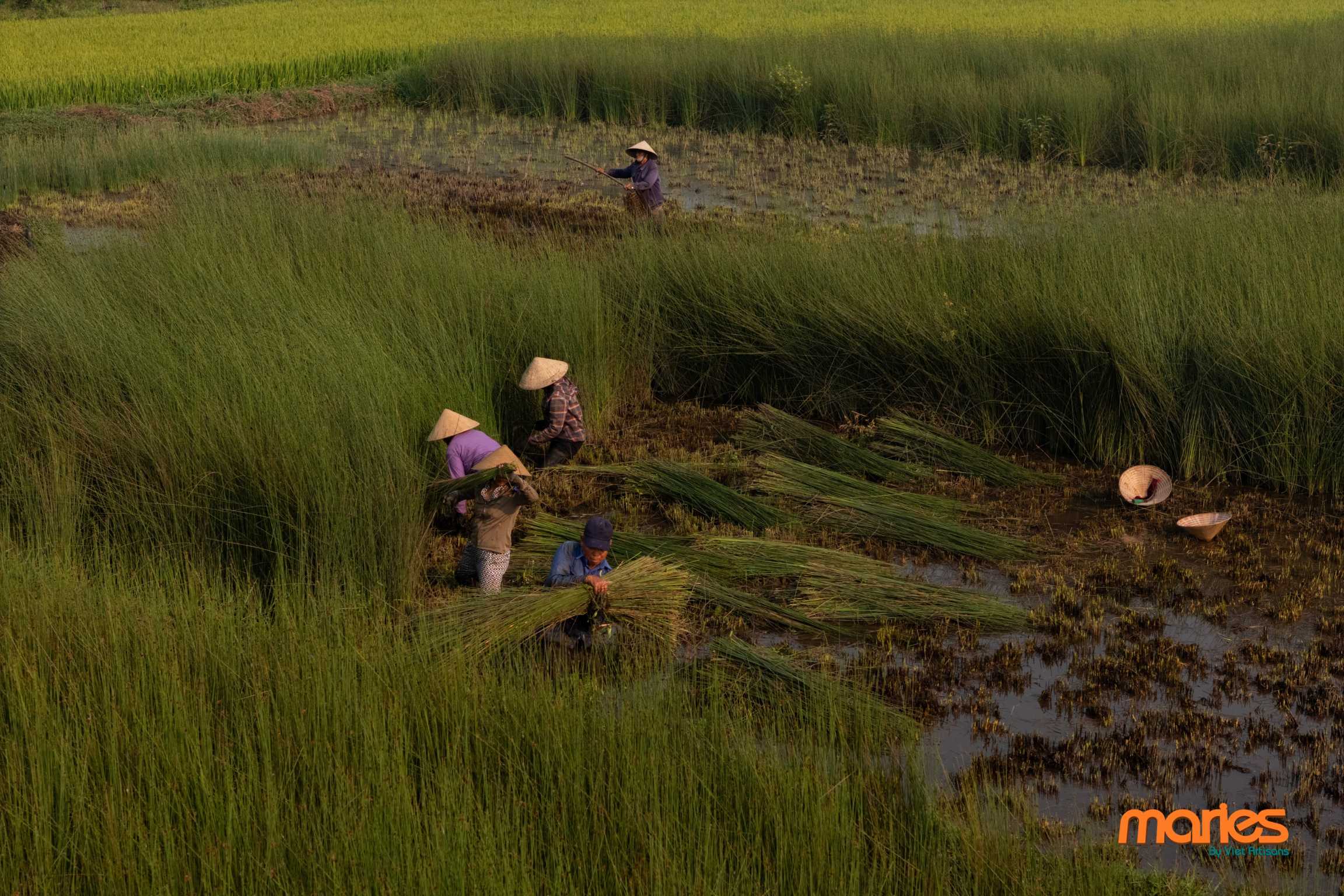
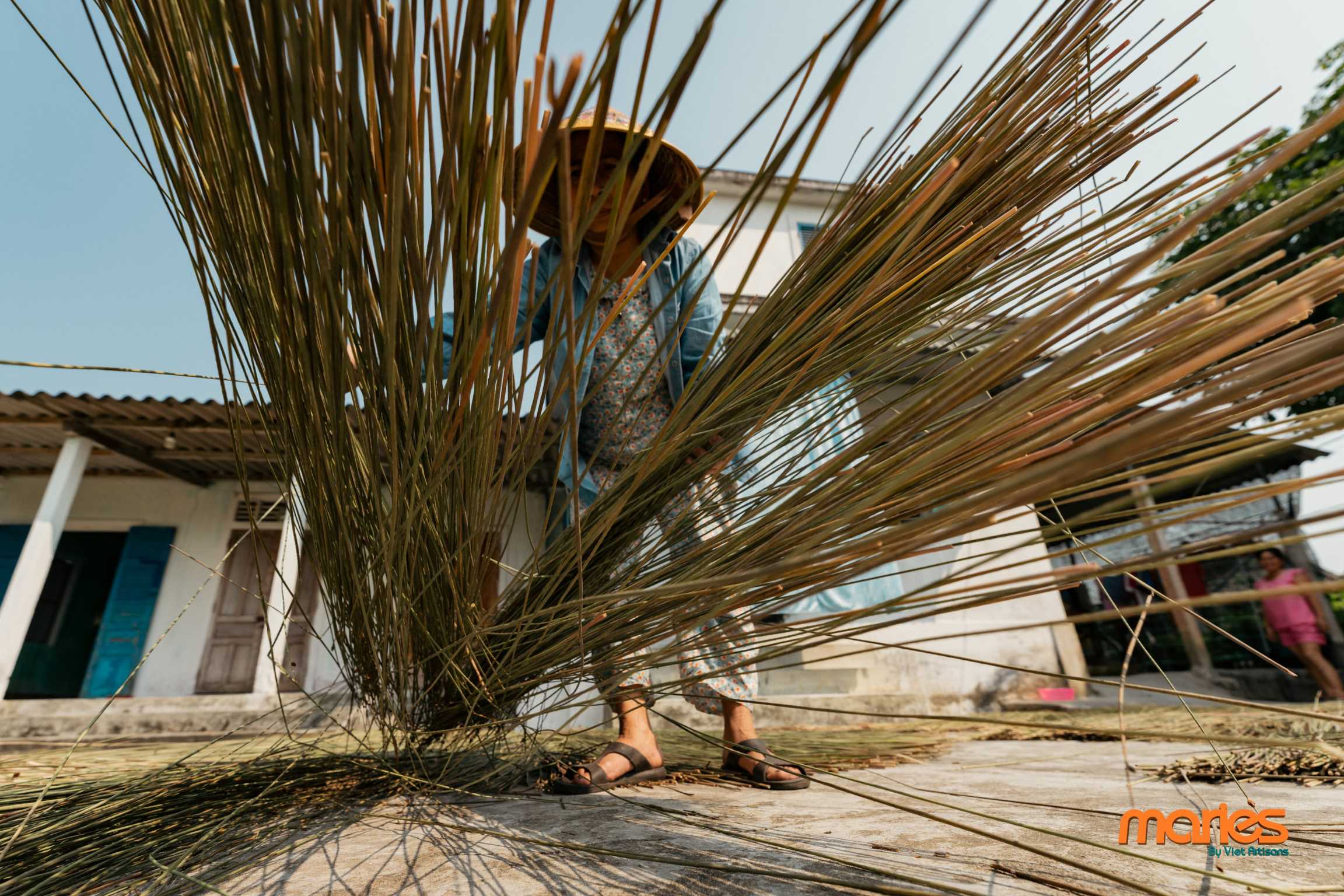
After that brief exchange, the two stepped back into the field and resumed harvesting. Across the wide expanse, they bent down in a steady rhythm, blades slicing swiftly through clusters of grass. The long, green, flexible strands of lepironia were gathered into their hands, one bundle at a time, firm and precise.
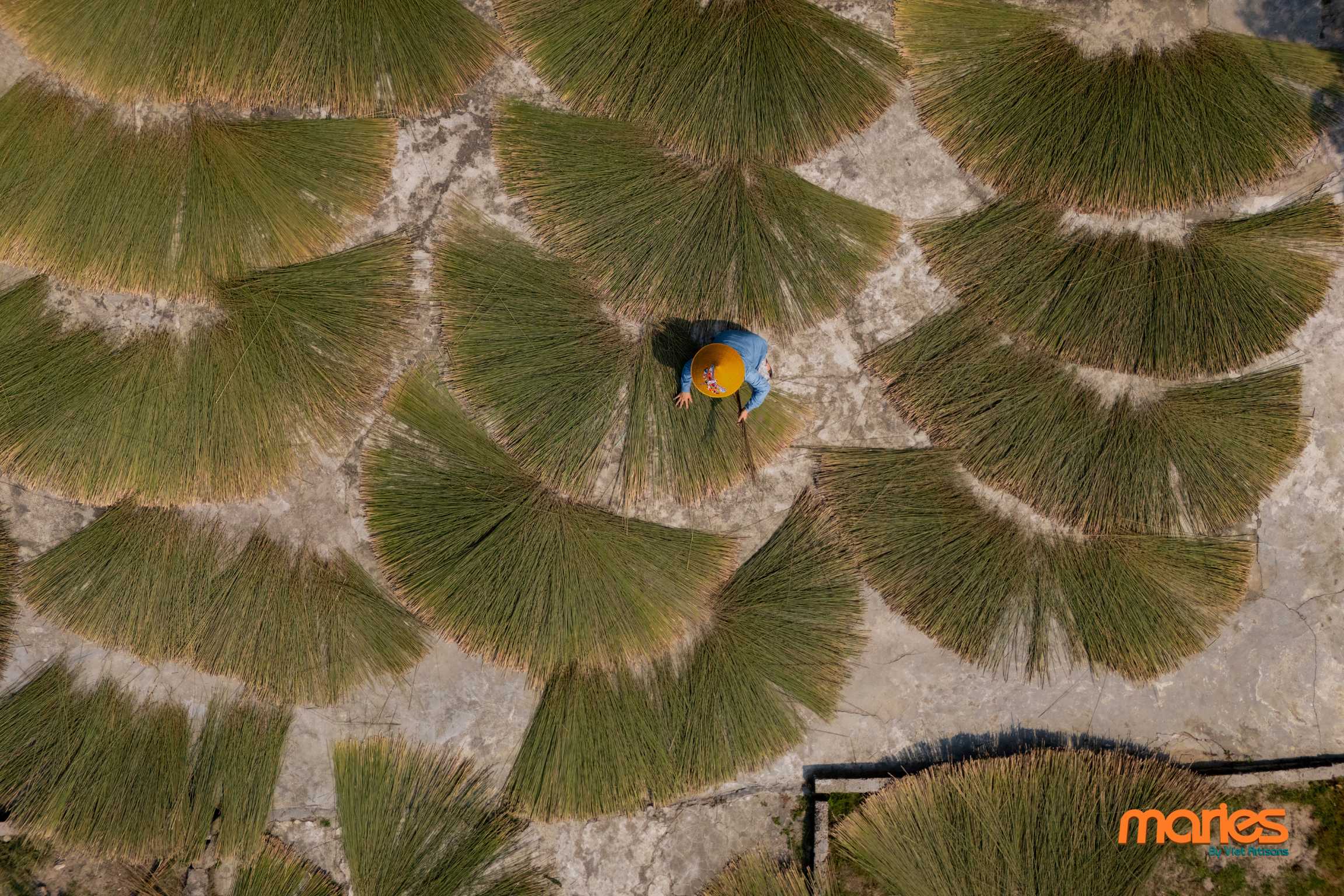
Then, in one familiar motion, they lifted the bundle high, turned their wrists slightly, and tossed it aside. The strands traced a soft arc through the air before landing neatly in layers on the field.
The movement repeated again and again. Even. Precise. Almost without error. It had become second nature—etched into their bodies through years of repetition. No need to look. No need to think. Only to feel.
Each cut, each toss… was not merely labor, but a skill accumulated over time, refined through seasons of sun and countless days wading through the fields.
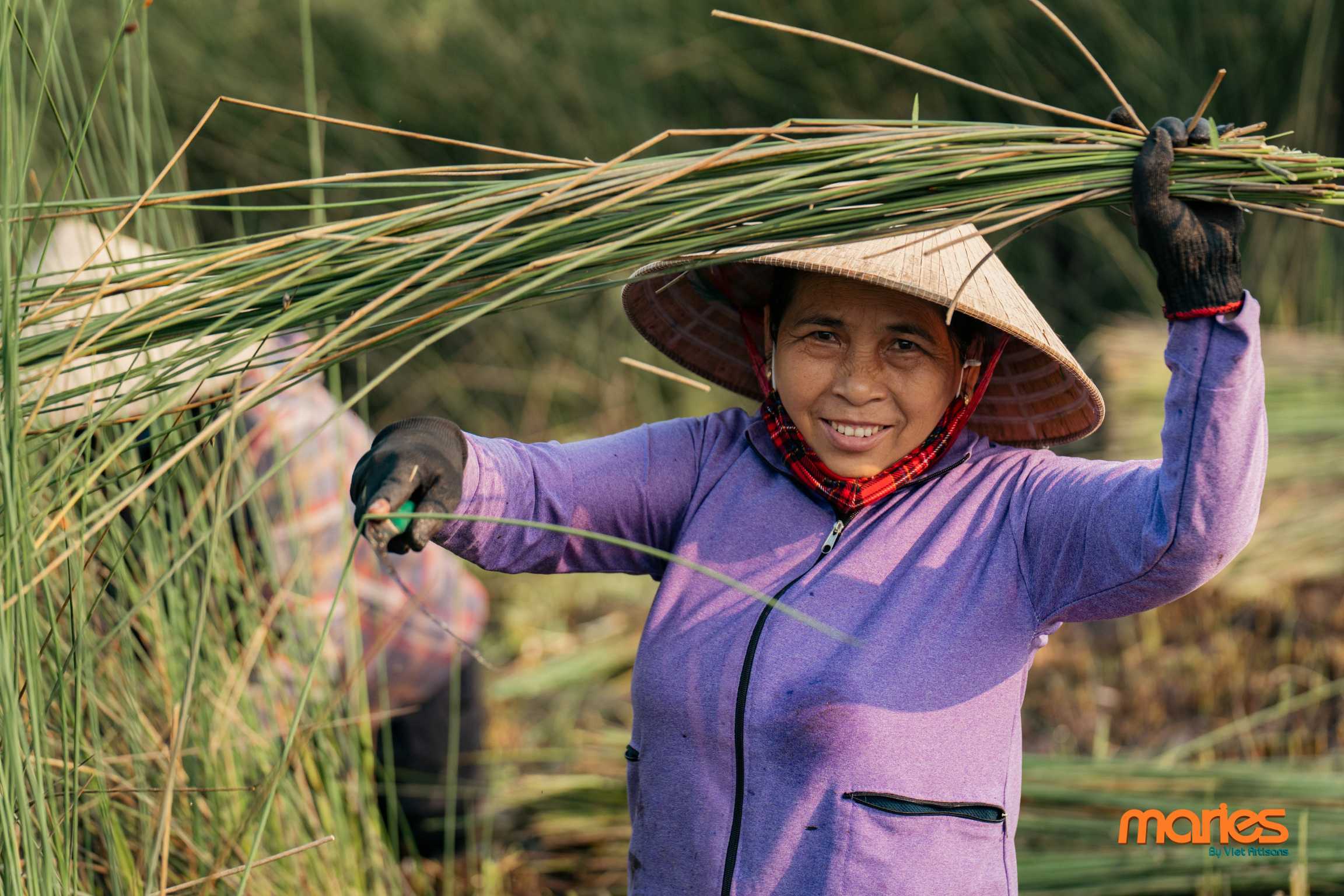
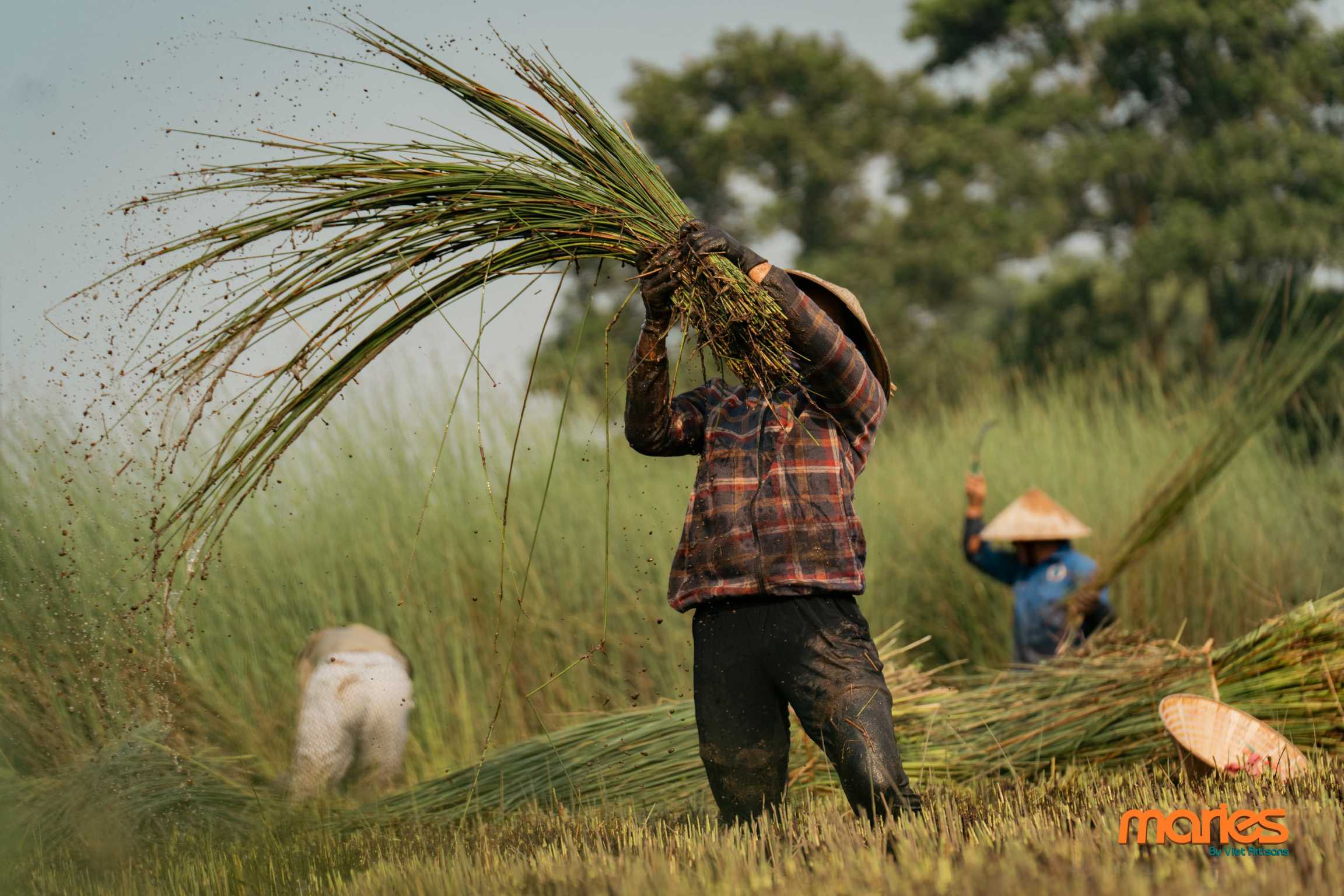
Around them, everything felt quiet. No rush. No noise. Only the soft rustling of lepironia grass swaying in rhythm with their hands, mixed with small, gentle conversations of the villagers. The water beneath their feet remained murky, mud clinging to each stem of grass, each step sinking down before being lifted up again with effort. The bundles were harvested by hands that had long mastered the work—quietly, persistently—just as they had stayed devoted to this craft for their entire lives.
At one point, Mr. Thành straightened up, squinting into the distance, and laughed out loud: “See? Grass covered in mud, heavy as it is, and yet it’s already made its way all the way to the world…” It sounded like a joke, light and casual under the scorching sun, yet it made the listener pause for a moment—then smile. From these mud-covered strands, from these familiar fields, something could travel so far—to places that even the people who made them had once never imagined.
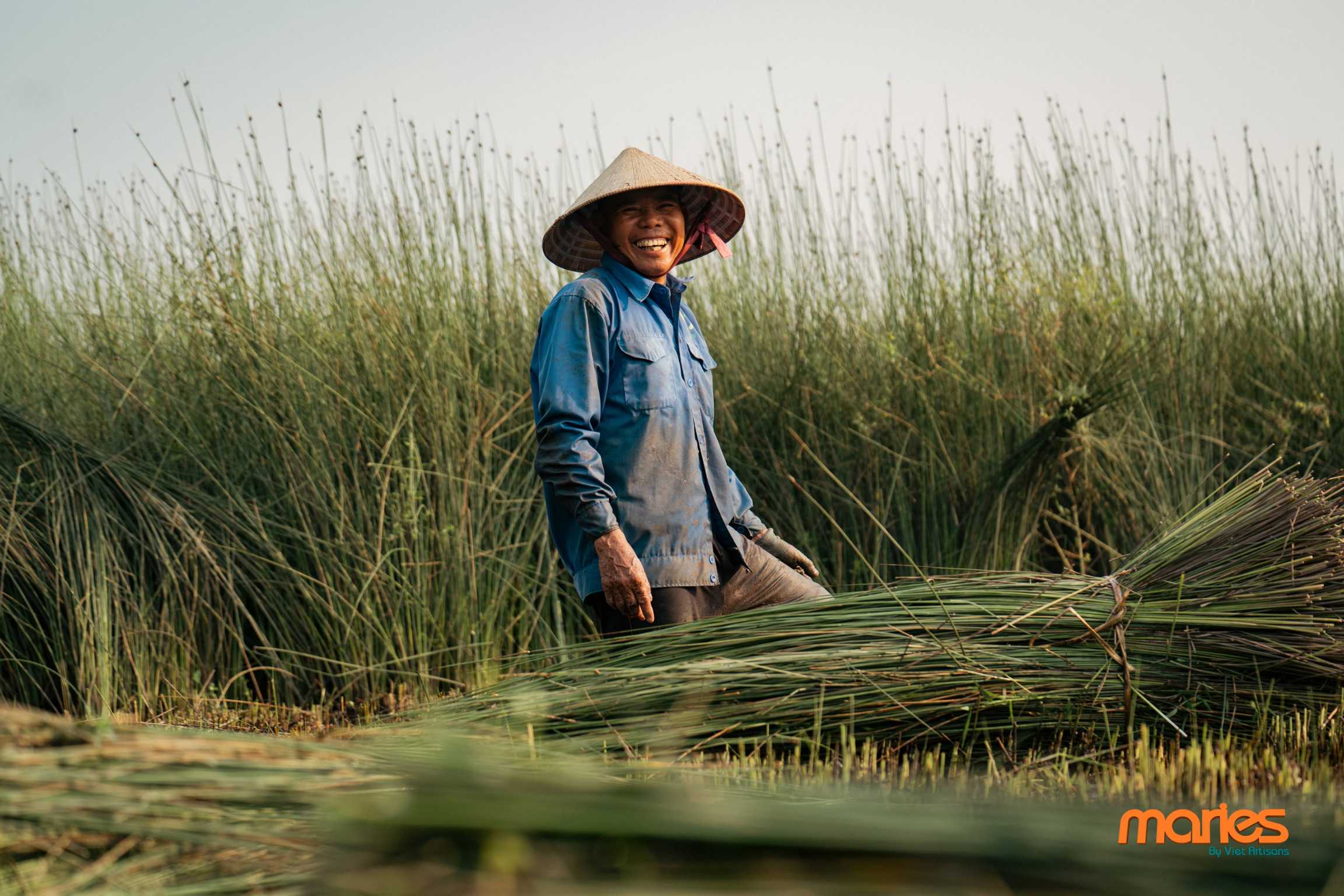
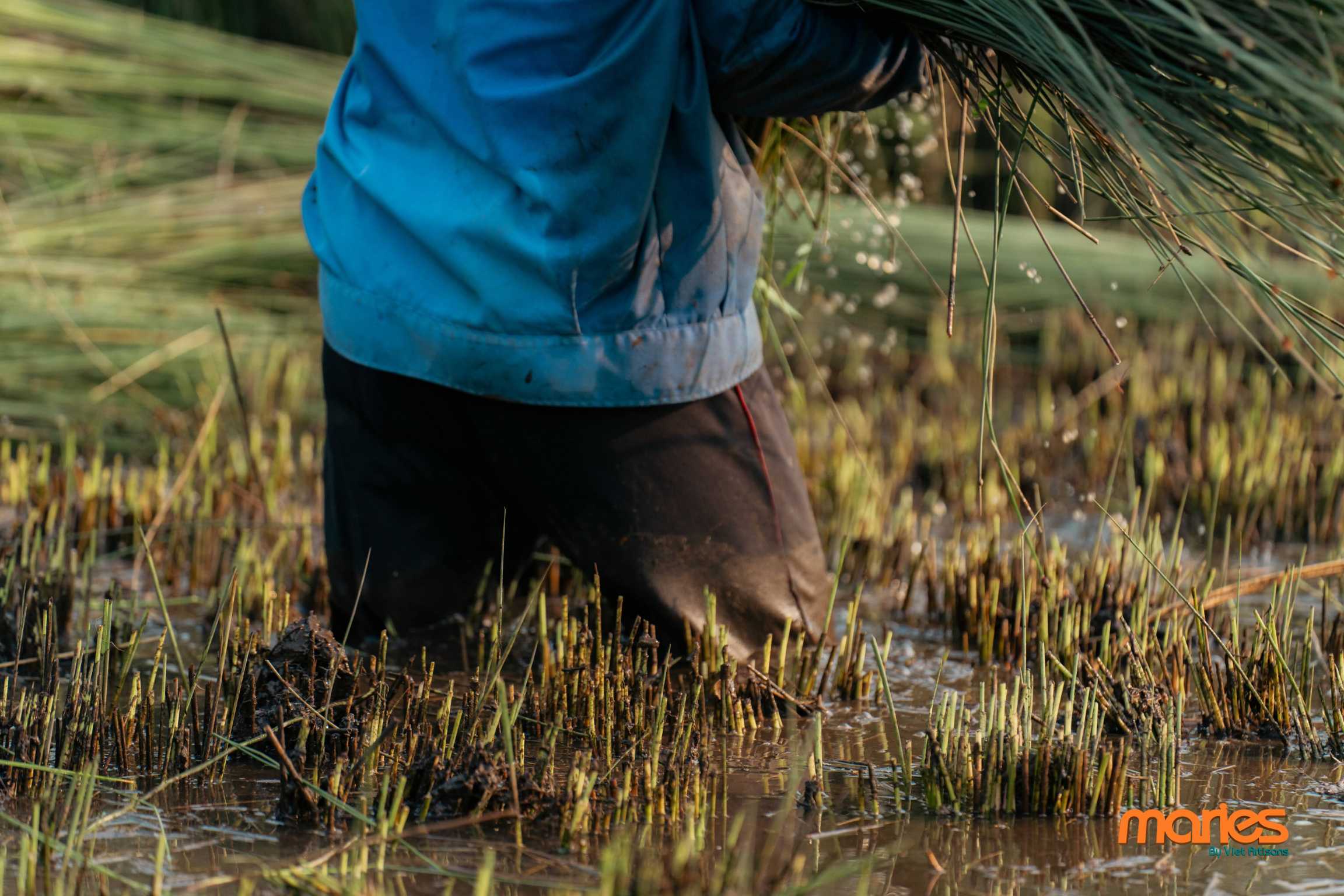
This is how the 2026 lepironia harvest season began. The same sun. The same people. The same tasks repeated year after year. People bent down to cut each stalk; others walked quietly through waterlogged fields; bundles were carried on shoulders, brought back, laid out under the sun, and continued through the familiar steps that followed. Everything seemed like an unchanged cycle. Yet, for those who stayed long enough and looked closely enough, something had shifted.
It wasn’t obvious. It wasn’t loud. But it was there.
There was no longer the sense of simply finishing the work. No longer the habit of doing things automatically. Instead, there was more care in every movement, a slight slowing down—just enough to do things properly, beautifully, completely. These changes were subtle, rarely spoken of, yet present in every detail: in how the grass was selected, how it was bundled, how each strand was handled, and even in how people spoke about their work.
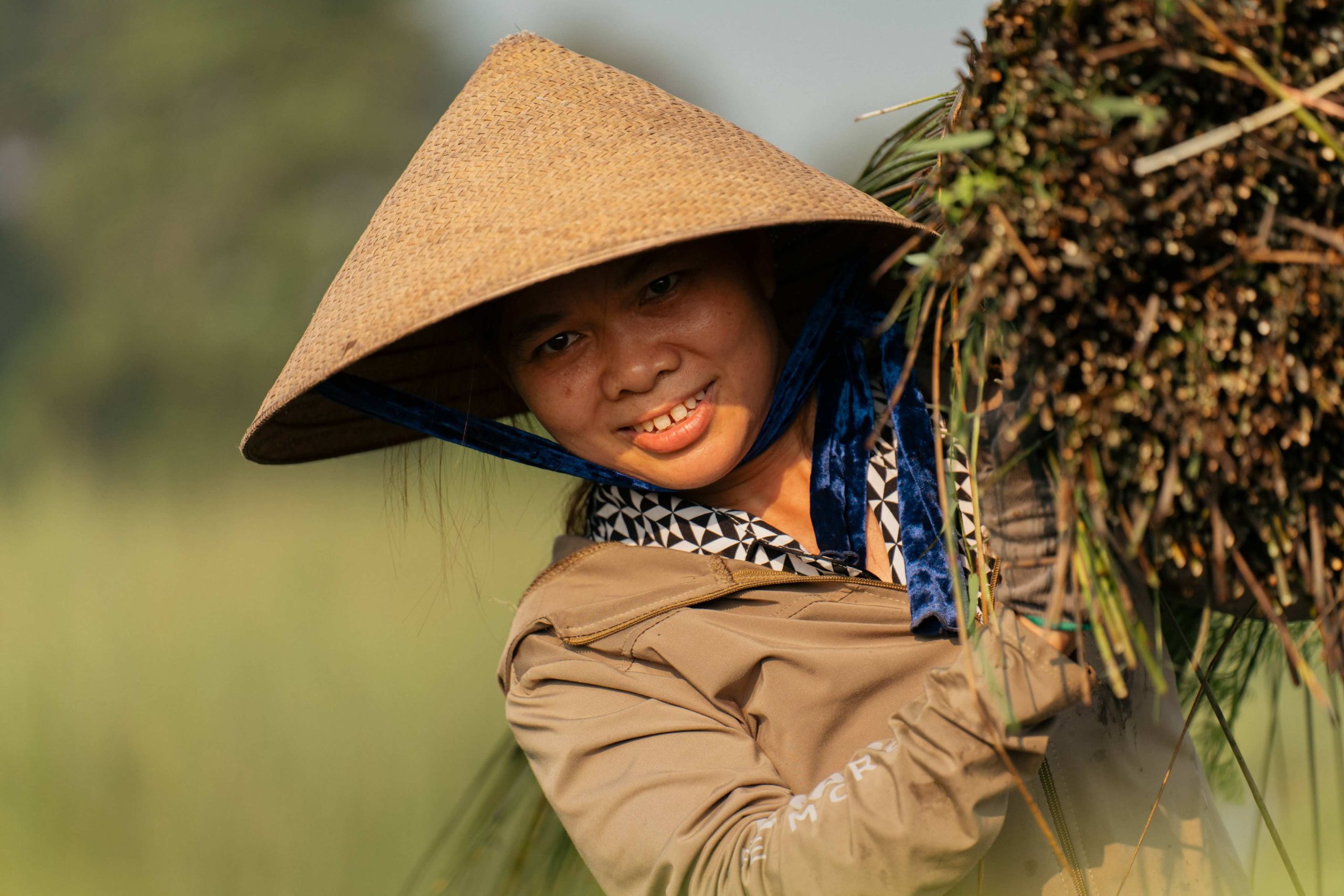
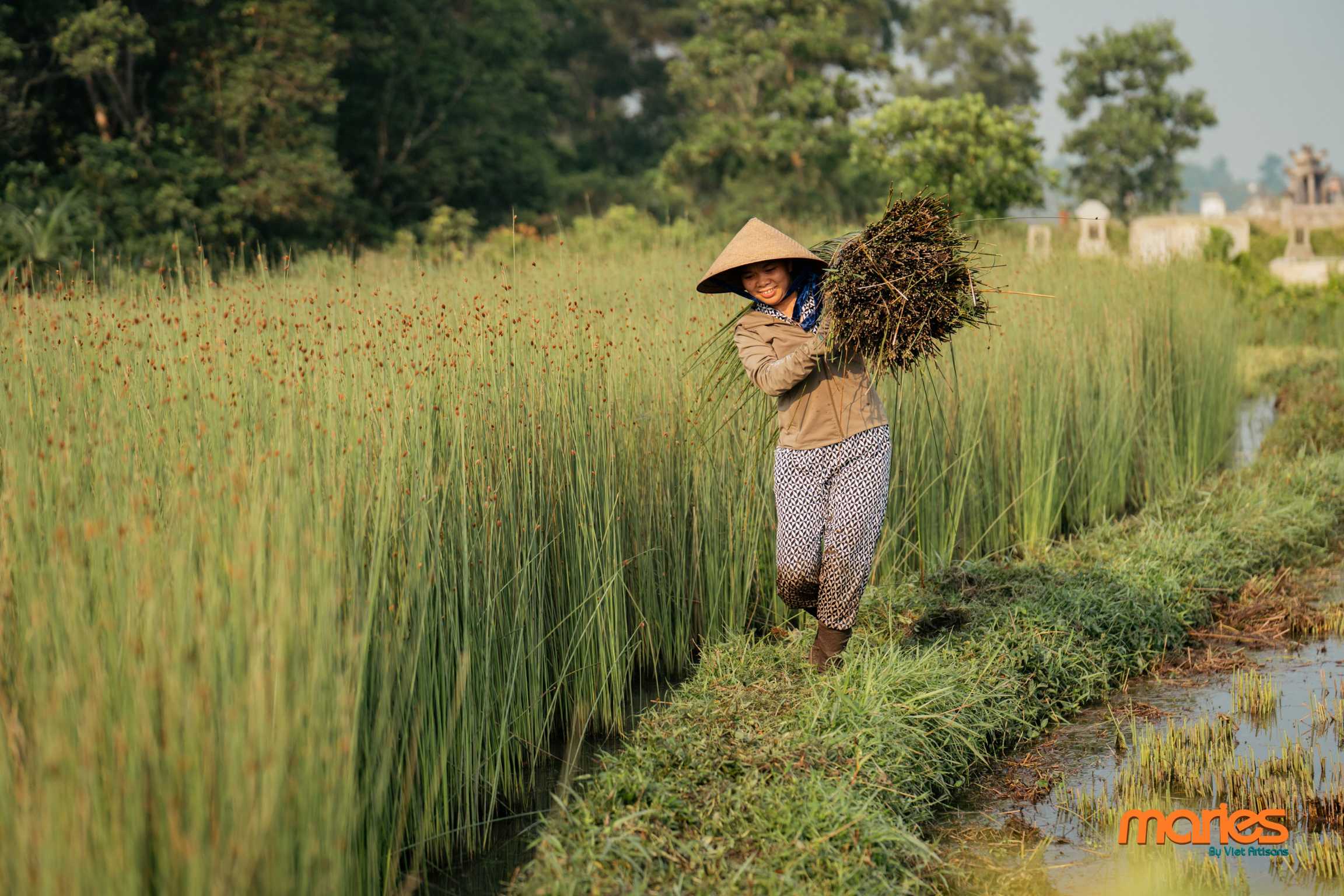
In the past, working with lepironia grass was simply that—work. Harvest, sell, and move on. People would weave everyday items like mats, simple carriers, or market bags, and once sold, that was the end of the story. Few thought about where those bundles of grass would go, what they would become, or who would eventually use them.
But over time, as products began to travel further, as the story of the craft village was told more clearly, the perspective of the artisans also began to change. They started to understand that what they were doing did not end in the fields or in their homes. It would become finished products—carrying the story of this land to distant places. This shift did not come from explanations, but from lived experience—from seeing the finished products, from hearing about where they had gone, from realizing that their work could reach something greater.
The 2026 harvest is not the first season that Maries has been present, but it is the moment when that connection has become clearer. Not through grand promises, but through consistent, tangible changes. Raw materials are selected more carefully, processes are carried out more precisely, and the value of each step is recognized more clearly. Most importantly, artisans no longer feel like they are doing a small, repetitive task day after day. Instead, they begin to see themselves as part of a journey—with direction, with purpose. A journey where every bundle of grass, every small step, carries meaning.
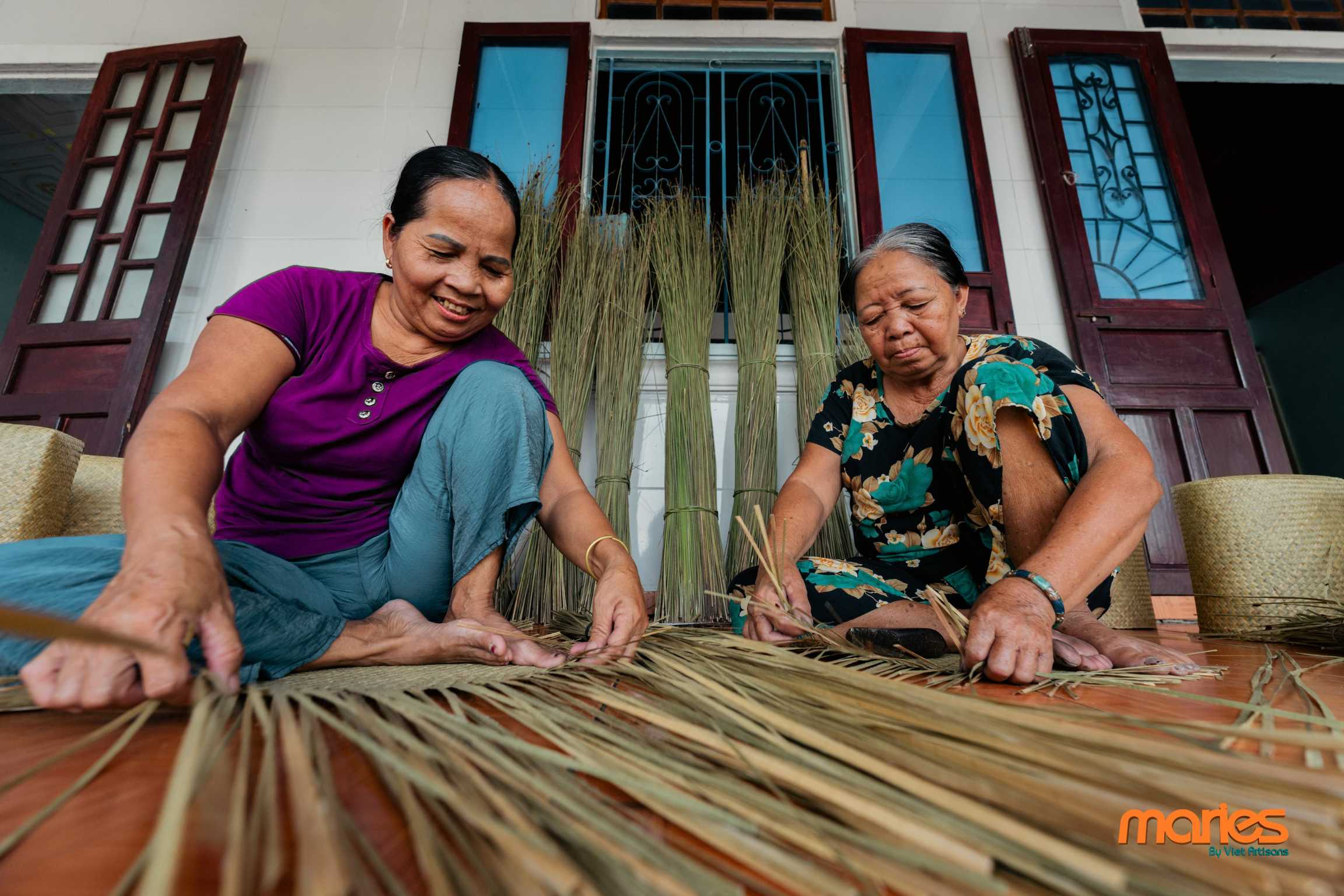
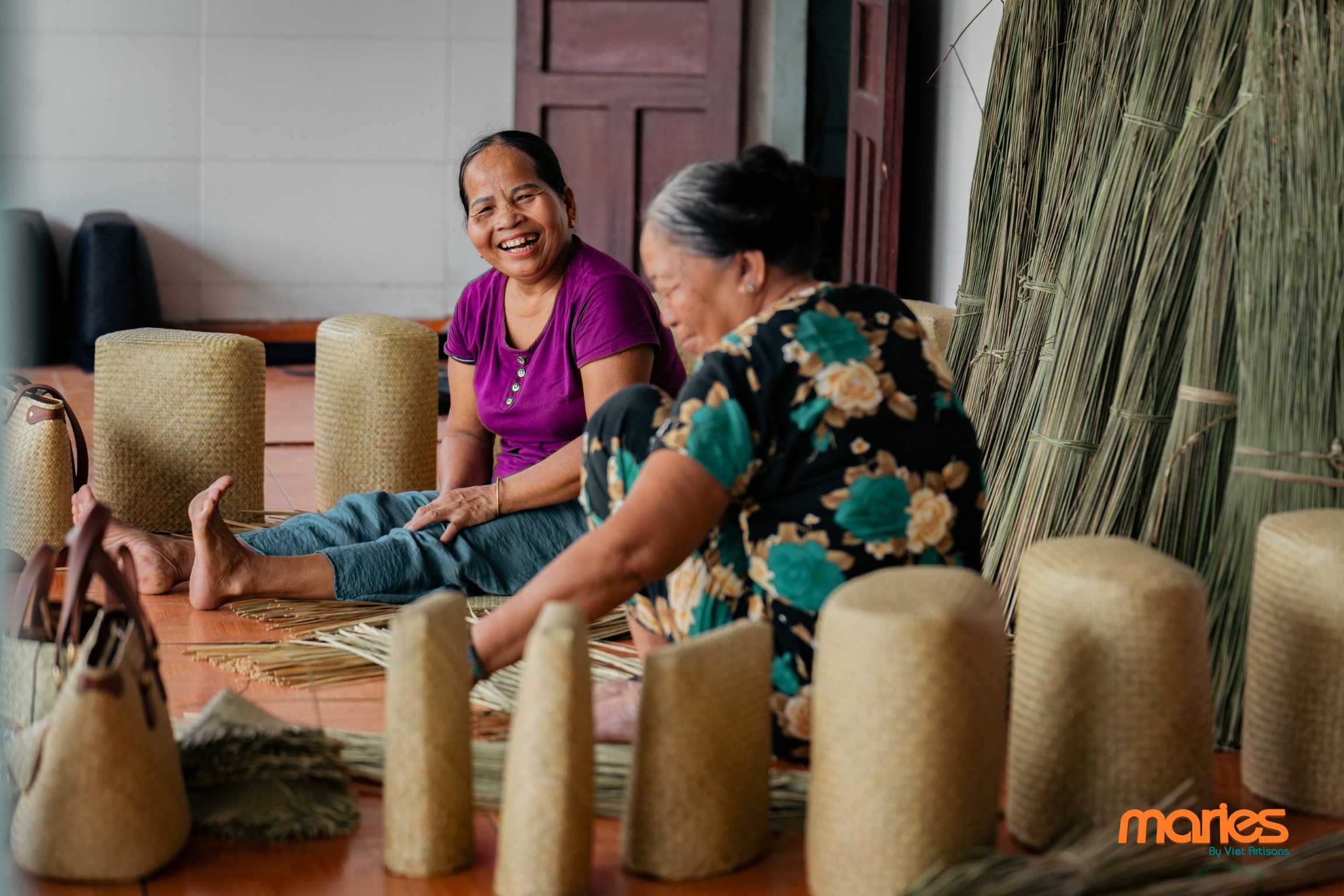
For Maries, the harvest season has never been just about raw materials. It is where everything begins. A bag or a hat does not start in a workshop. It begins with muddy footsteps in the field, with heavy bundles carried under the sun, with drops of sweat falling into the soil—and with people like Mr. Thành and Mrs. Liên. People who work, who share, who laugh, and who preserve their craft in their own way.
Their words are not prepared. They are not slogans. Yet they carry within them an entire lifetime of experience—a way of understanding the craft that only those who have lived it for decades can fully grasp.
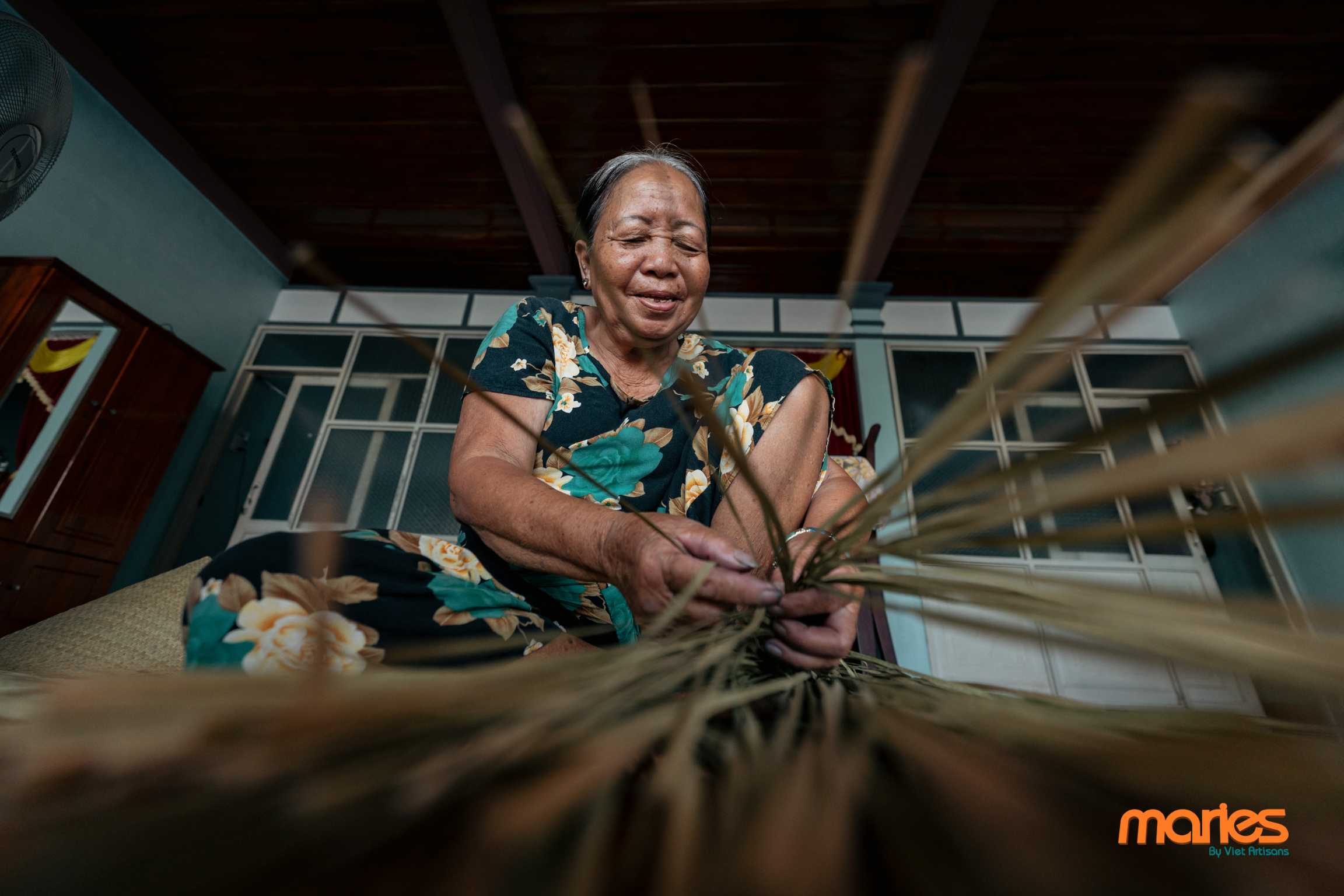
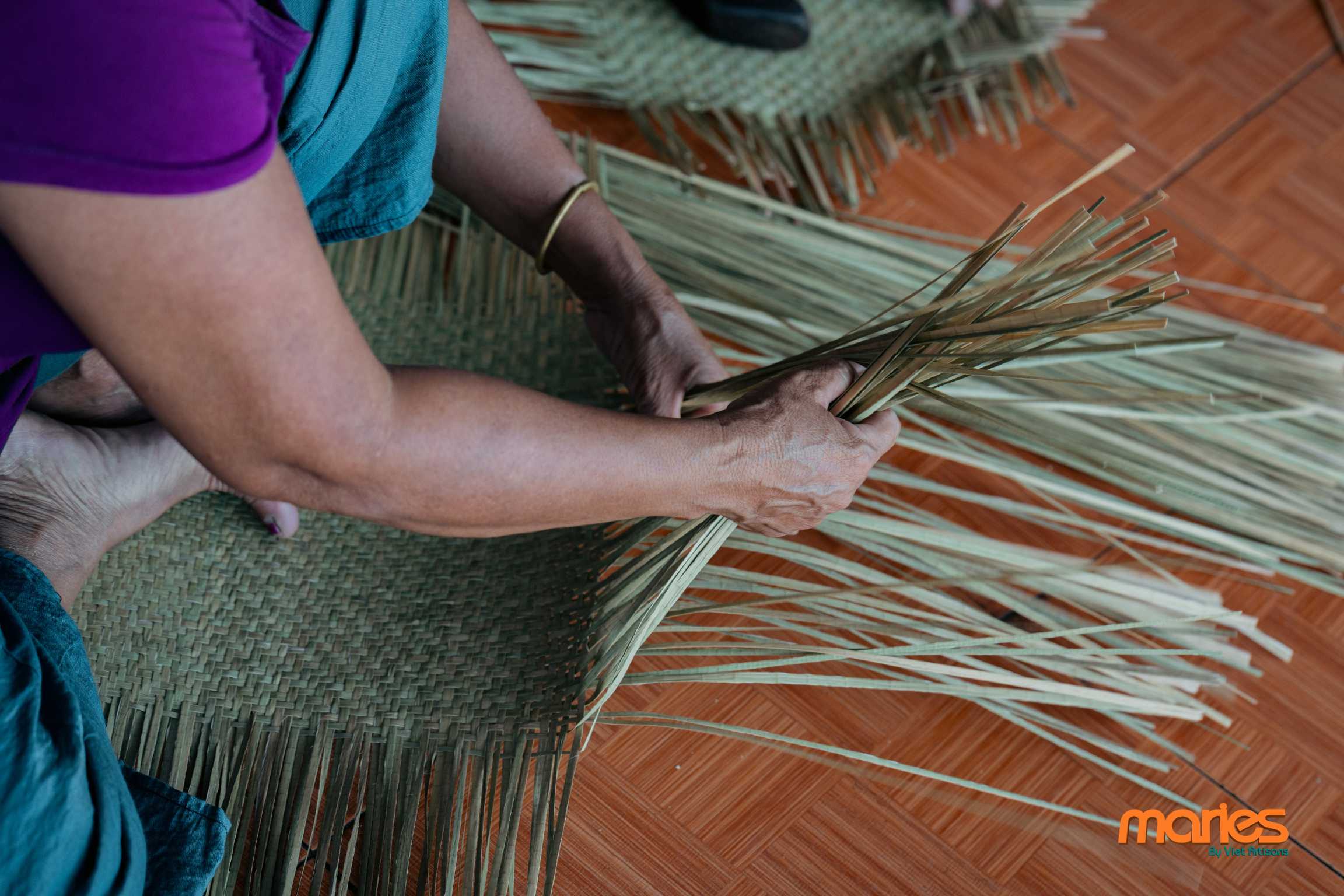
Looking back, this harvest season may not seem dramatically different, yet it is no longer the same as before. There is now a stronger connection between those who harvest the material and those who create the final products. There is a deeper appreciation for each small step. And there is a clearer belief that what is being done today is not just about completing seasonal work, but about contributing to something more lasting.
A value that belongs not only to individuals, but to a whole community—to a craft village striving to preserve itself amidst change.
Under the harsh April sun, across fields that appear unchanged, Mr. Thành’s laughter still rings out, light and familiar. But this time, when hearing him say, “grass covered in mud, heavy as it is, and yet it’s already made its way all the way to the world” it no longer sounds like just a joke. It feels like something that is gradually becoming real—little by little, through each harvest, each bundle of grass, each finished product that travels further and further away./.